Press "Enter" to skip to content

Month: December 2025

Return of mandatory masking in Outaouais hospitals

The Centre intégré de santé et de services sociaux (CISSS) de l’Outaouais has decided to reinstate mandatory mask wearing upon entry into its care facilities.

Starting on Tuesday, wearing a mask is mandatory in hospital centres, including the outpatient ward, the Pierre-Janet mental health hospital (including units 5 and 6 of the juvenile wing), the Physical rehabilitation centre, La RessourSe, residential and long-term care centres and seniors’ homes and alternative housing.

Comments closed

Long-COVID research just got a big funding boost: will it find new treatments?

The German government has committed half a billion euros to research into long COVID and other post-infection syndromes.

In a major boost to research on long COVID and chronic fatigue syndrome (CFS), also known as myalgic encephalomyelitis (ME), the German government has announced that it will provide €500 million (US$582 million) in research funding to support a National Decade Against Post-Infectious Diseases from 2026 to 2036.

Germany is one of many countries facing an unprecedented health burden owing to long COVID and other post-infection syndromes since the COVID-19 pandemic. Almost one in five people in a German cohort had long COVID in 2022, and around one in seven people in the United States were affected by long COVID by late 2023. This translates to a considerable burden on health care and the economy — the syndrome is estimated to cost the world economy US$1 trillion every year.

Comments closed

SARS-CoV-2 Leaves a Lasting Mark on the Immune System

A landmark new study shows COVID-19 isn’t ‘just a cold’: One infection left people with long-lasting immune damage, and those with heart disease lost up to 70% of key immune cells. Reinfections may worsen this. The message is clear: protecting ourselves still matters.

A new study in the International Journal of Infectious Diseases should end any lingering idea that SARS-CoV-2 is ‘just another cold virus.’ It shows that a single, relatively short Omicron wave left a long, measurable scar on the adaptive immune systems of tens of thousands of adults and that people with cardiovascular disease (CVD) may be living with something close to chronic immune compromise nearly two years later.

This isn’t about individual anecdotes, or small clinic cohorts. It’s a population-scale signal, drawn from more than 40,000 patients in a region of China that had almost no SARS-CoV-2 circulation until late 2022. It is, in many ways, the cleanest before and after picture we have of what one mass SARS-CoV-2 exposure does to human immunity.

Comments closed

Opinion: Don’t wait for B.C. public health to protect you this flu season

Ten years ago, I took on a physician leadership position at my health authority that gave me a glimpse into the workings of its hospitals.

During a particular meeting that has remained burned into my memory, the department head for medicine was shaking his head in disbelief at having to state the obvious: “Why is it that every year, just like snow in winter, we know flu is coming, and yet every year flu catches us by surprise?”

The room fell silent.

Comments closed

Alberta government rejected expert advice to report probable measles cases, documents show

The Alberta government rejected expert advice to expand public reporting of measles to include probable cases, despite the measure being supported by local and provincial public health officials, documents obtained by The Globe and Mail show.

Since the outbreak began in Alberta last spring, only confirmed cases of measles have been publicly reported. New data provided through a Freedom of Information request show at least 450 probable cases of measles have also been identified in the province, bringing the total to nearly 2,500.

Comments closed

CDC advisers drop decades-old universal hepatitis B birth dose recommendation, suggest blood testing after 1 dose

This morning, after contentious discussion, the Advisory Committee on Immunization Practices (ACIP) voted 8-3 to drop the recommendation for a universal birth hepatitis B vaccine dose and 6-4 to suggest that parents use serologic testing—which detects antibodies in the blood—to determine whether more than one dose of the three-dose series are needed.

Under the first recommendation, only infants born to mothers who test positive for hepatitis B would receive a birth dose, while parents of other babies would be advised to postpone the first dose for at least two months.

ACIP makes vaccination recommendations to the Centers for Disease Control and Prevention (CDC), including those for different age-groups and disease risk status, as well as on US immunization schedules for children, adolescents, and adults. The CDC director has ultimate discretion whether to approve ACIP’s advice, and physicians can make their own decisions about whether to comply, but ACIP recommendations have historically affected insurance coverage of vaccines.
Comments closed

Panel Votes to Stop Recommending Hepatitis B Shots at Birth for Most Newborns

In a move toward Health Secretary Robert F. Kennedy Jr.’s goal of upending vaccine policy, the committee recommended delaying the shots for infants whose mothers test negative for the virus.

A federal vaccine committee took a major step toward Health Secretary Robert F. Kennedy Jr.’s goal of remaking the childhood vaccine schedule on Friday, voting to end a decades-long recommendation that all newborns be immunized at birth against hepatitis B, a highly infectious virus that can cause severe liver damage.

The divisiveness and dysfunction of the committee in making the decision, however, raised questions about the reliability of the advisory process and left at least one critic “very concerned about the future” of the Centers for Disease Control and Prevention.

The panel, called the Advisory Committee on Immunization Practices, voted 8 to 3 that women who test negative for hepatitis B should consult with their health care provider and decide “when or if” their child will be vaccinated against the virus at birth. The committee did not change the recommendation that newborns of mothers known to be infected or whose status is unknown be immunized. The shift is not expected to affect insurance coverage of the shots.

Comments closed

COVID-19 mRNA vaccines do not increase mortality, a study shows

COVID-19 vaccines have not caused an increase in mortality in France since their appearance in the early 2020s, according to a study that refutes the widespread false theories prevalent in vaccine skeptic circles.

“COVID messenger RNA [mRNA] vaccines do not increase the long-term risk of all-cause mortality,” states Epi-Phare, a French organization comprising the Agence nationale de sécurité du médicament (ANSM) and Assurance maladie, in a study published in JAMA Network Open (opens in a new window).

To reach these conclusions, its authors examined data from nearly 30 million French people between 2021 and 2025, representing the entire 18-59 age group.

Comments closed

Children’s hospitals in Canada face flood of flu visits as doctors urge families to get vaccinated

High volumes put strain on limited pediatric hospital capacity, with flu season set to peak later this month

An early start to Canada’s flu season is hitting children hard, sending a flood of young patients into multiple pediatric hospitals as medical teams warn that emergency visits and admissions could keep climbing in the weeks ahead.

At CHEO, eastern Ontario’s children’s hospital in Ottawa, eight times more children tested positive for influenza in November compared with the same month in 2024, while double the number of children needed to be hospitalized. Most of those children hadn’t had a seasonal flu vaccine, according to CHEO’s emergency department team.

Comments closed

Vaccine Committee May Make Significant Changes to Childhood Schedule

Comments by President Trump, Health Secretary Robert F. Kennedy Jr. and some panelists suggest the committee is likely to delay hepatitis B shots and discuss revising the use of other vaccines.

Advisers to Health Secretary Robert F. Kennedy Jr. appear poised to make consequential changes to the childhood vaccination schedule, delaying a shot that is routinely administered to newborns and discussing big changes to when or how other childhood immunizations are given.

Decisions by the group are not legally binding, but they have profound implications for whether private insurance and government assistance programs are required to cover the vaccines.

Comments closed

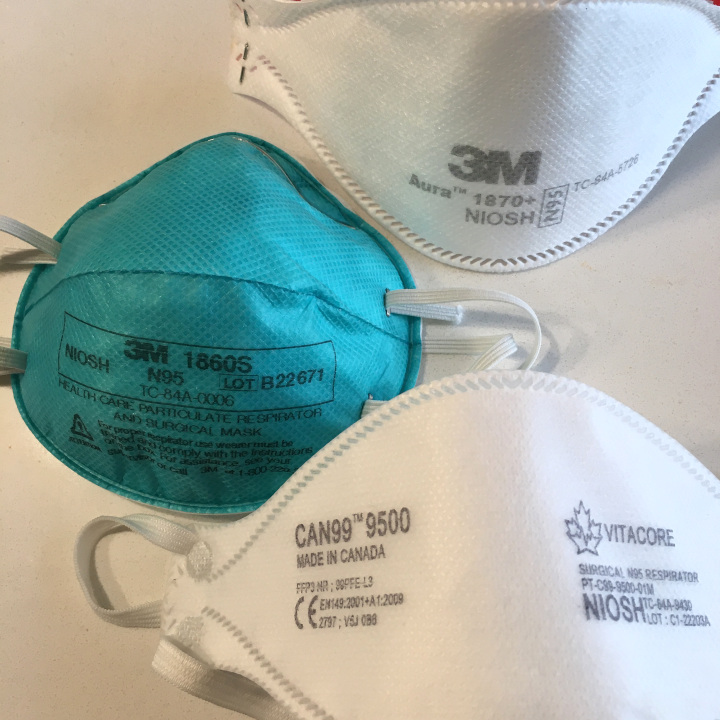
Ontario wrote off $1.4B of PPE, province burning expired equipment: auditor

Province still buying masks, other protective gear at same levels as height of the pandemic

Ontario wrote off more than one billion items of personal protective equipment at a cost of $1.4 billion since 2021, the province’s auditor general found.

Shelley Spence found the province continues to purchase masks, gowns and other protective gear at the same levels as the height of the COVID-19 pandemic in 2020 and 2021, despite significantly declining demand.

“We found that expired products began to accumulate in the provincial stockpile as some of the products purchased during the pandemic fell short of desired quality standards and were not used,” Spence wrote in her annual report.

Comments closed

New HIV prevention guidelines say doctors should not be ‘gatekeeping’ PrEP

A coalition of doctors across Canada is releasing a new guideline for prescribing medications that can prevent HIV infection, with a strong focus on increasing the promotion and awareness of the expanding class of drugs.

The clinical guideline published Monday in the Canadian Medical Association Journal provides 31 recommendations and 10 good practices for prescribing antiretroviral medication before and after a potential HIV exposure to prevent infection.

Lead author Dr. Darrell Tan said 19 physicians volunteered their time over the last three years to review the latest research and write the new guidelines, as the range of available pre-exposure prophylaxis (PrEP) and postexposure prophylaxis (PEP) options has expanded since the last guidance was released in 2017.

Comments closed