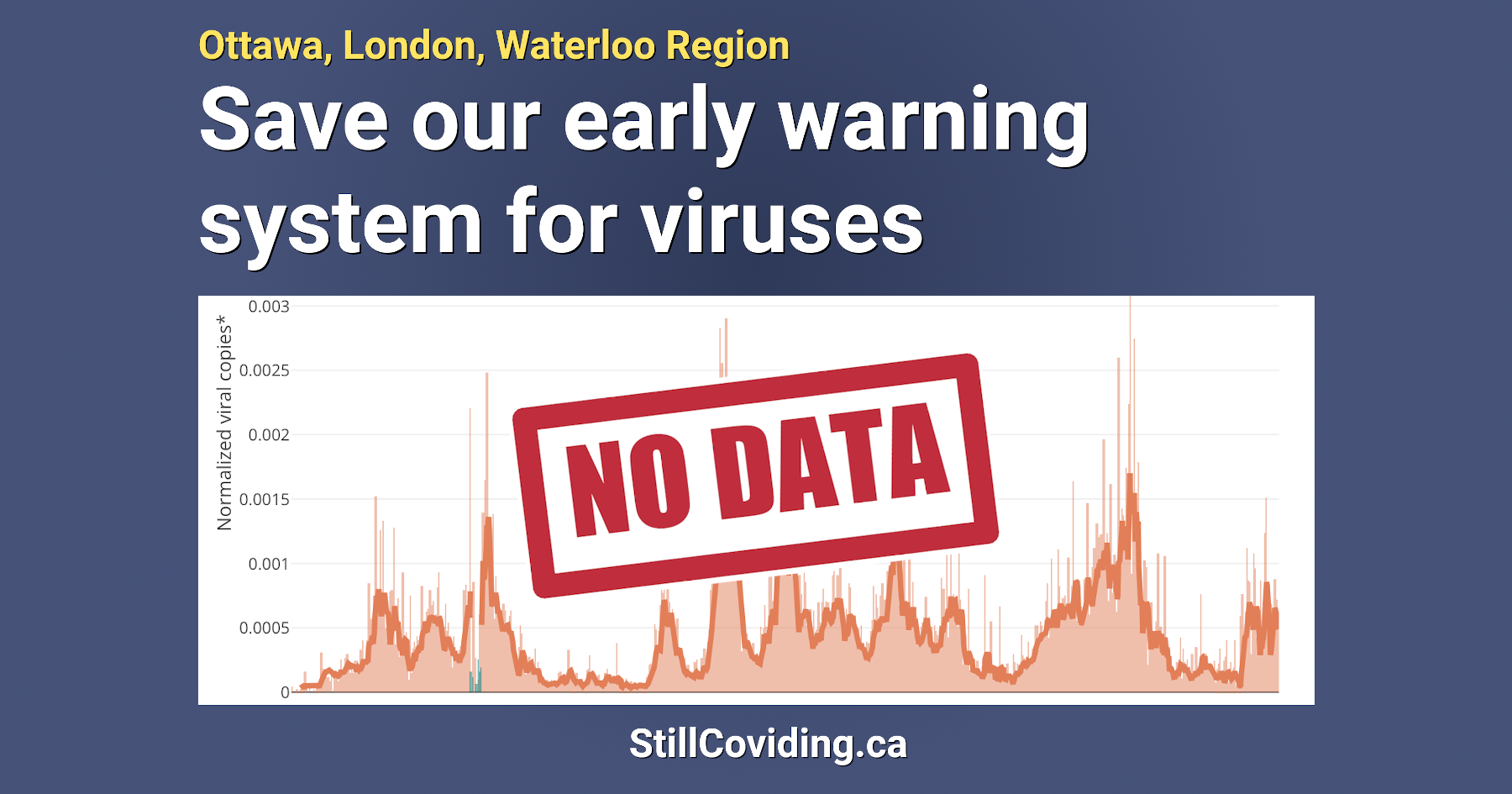
📣 Let municipal councillors know you want funding for wastewater monitoring to continue
✉️ Send letters to municipal councillors to voice your support for wastewater monitoring. Use our online tool to send emails.
Comments closed✉️ Send letters to municipal councillors to voice your support for wastewater monitoring. Use our online tool to send emails.
Comments closedThe Ontario government abruptly ended its wastewater surveillance program earlier than planned this summer, despite having funding in place until the end of September and being warned that the move could leave gaps in crucial information for public health, internal documents indicate.
The government pulled the plug at the end of July on the globally praised program that, at its peak, covered about 75 per cent of the province.
The program, overseen by the Ministry of the Environment, provided an early warning signal to health officials about the spread of COVID-19, influenza, RSV and other infectious diseases, based on wastewater testing.
Documents obtained through access to information by the Ottawa Citizen indicate that the province’s hasty decision last spring to end the program came before Ontario’s Ministry of Health had even begun negotiations with the federal government about taking over wastewater surveillance.
Comments closedCOVID-19 is surging in parts of North America and Europe, and even played a role in ending the presidential campaign of 81-year-old Joe Biden, who was infected for the third time last month.
Nevertheless, on Wednesday the Ontario government shut down its early warning system to detect COVID and other emerging diseases.
Doctors, citizens and researchers are calling the decision to kill the province’s wastewater disease surveillance program both wrong-headed and dangerous. Ending the program will make it harder to track and thwart viral outbreaks, they say, and thereby increase the burden on Ontario’s understaffed hospitals, which experienced more than 1,000 emergency room closures last year.
“Pandemics do not end because science has been muzzled,” Dr. Iris Gorfinkel, a well-known Toronto physician and clinical researcher, told the CBC.
In emails to politicians, more than 5,000 citizens have demanded restoration of the program, with little effect.
Comments closedFor the past three years, Alexandra Johnston has started her work day by reaching for the pickaxe in the trunk of her car.
It is her tool of choice for prying open manhole covers – a task she demonstrated with practised ease last week while on a tour of her wastewater sampling regimen in Toronto.
Wearing a surgical mask and gloves, Ms. Johnston dragged the heavy cover aside, then grabbed hold of the fishing line secured underneath. After hauling up a few metres of line, she displayed her catch: a dripping wet tampon she had placed there the day before.
Her teammate, Claire Gibbs, quickly moved in with a prelabelled plastic bag to capture the sewage-laden sample. Using scissors, Ms. Gibbs deftly snipped the line, sealed the bag and stowed it away in the trunk as part of that day’s delivery.
Comments closedOttawa Public Health wants to collaborate with local partners to look for ways to continue wastewater monitoring after the province cuts funding to the program next month.
At its meeting this week, the city’s board of health passed a motion directing Medical Officer of Health Dr. Vera Etches to write to provincial and federal partners to find ways to continue the wastewater testing work that’s being done at the University of Ottawa.
Earlier this month, Ontario announced that by the end of July, it will scrap the program for sampling wastewater to monitor levels of COVID-19 in the population. The program began in 2020 and is funded through the Ministry of Environment, Conservation and Parks.
Comments closedImagine, if you will, a system of disease surveillance that doesn’t rely on expensive and painful tests. It does not require us to get swabs stuck up our noses, needles poked into our arms, or even to answer banal questions about symptoms. Instead, this system asks us to go about our regular day, sleeping, waking, eating, and … defecating … exactly as we would normally. In this system, heroic nerds — out of sight and out of mind — scoop and test samples of sewage in order to tell us whether disease rates are either concerning or tolerable.
Now imagine that shortsighted policymakers decide to defund such a surveillance system, just as its worth and pioneering quality are being celebrated worldwide.
Ontario’s infectious disease wastewater testing has been among the very few bright spots in an otherwise spotty COVID pandemic response. Absent a robust active surveillance system, which would involve regular random testing of large numbers of people for a variety of diseases — such as COVID, Mpox, RSV and influenza — scientists have relied on four sources of data to measure the extent of infection in our populations: hospitalization and mortality rates, the occasional testing of people who show up sick at some hospitals (what we call “sentinel surveillance”) and wastewater testing.
Of the four, wastewater is the only method that captures nearly all cases, especially asymptomatic infections or those not serious enough to seek medical attention. With the closing of COVID testing centres and the lack of availability of at-home rapid tests for COVID and other diseases, wastewater levels have been perhaps the best metric for informing the general public about current infection risk. And that information is critical for those who need to make daily exposure and socialization decisions to protect themselves and others from infection.
Comments closedOntario to halt COVID wastewater surveillance program, June 4
The Ontario government’s plan to axe funding for wastewater surveillance is irresponsible. Wastewater monitoring is an essential public health tool that provides insights into the spread of SARS-CoV-2, influenza and other viruses. Without funding, we will lose important information about the prevalence of these significant health concerns.
The timing of the announcement is astonishing. We are faced with an ongoing COVID-19 pandemic, and new hyper-infectious subvariants are spreading rapidly. We will be hindered in providing an early warning system to inform everyone about new subvariants and emerging pandemic threats such as avian flu.
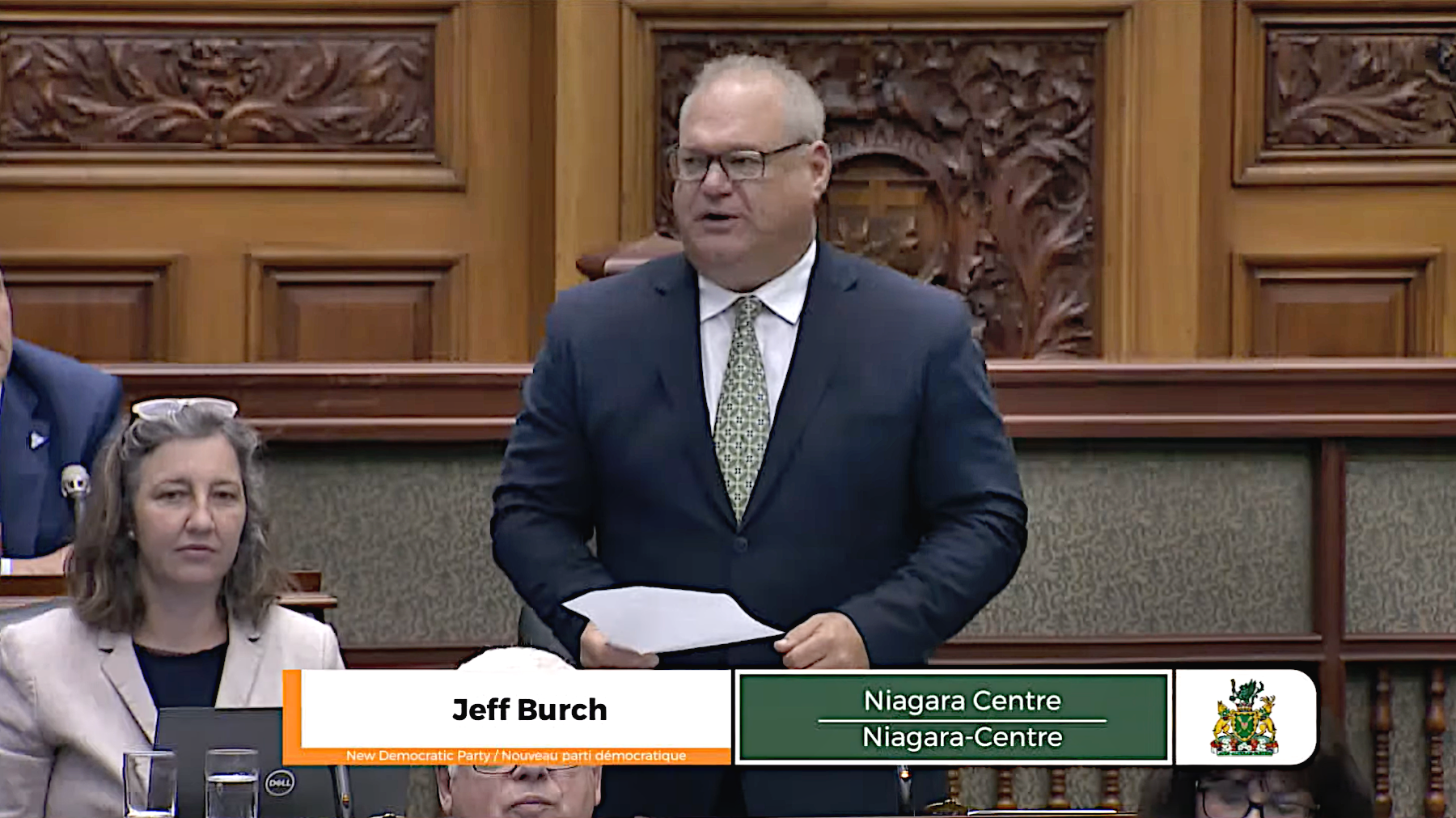
Comments closedDuring Question Period on June 6, 2024, Jeff Burch, MPP for Niagara Centre, asked some questions about the Ford government’s plans to eliminate Ontario’s wastewater monitoring program: “[…] with a serious gap in the federal government’s current ability to test wastewater in Ontario, why would this government abruptly cut this extremely low cost but highly valuable program?”
The government’s response was misleading. “The program is continuing through an expanded option with the federal government,” said Andrea Khanjin, Minister of the Environment, Conservation and Parks.
That’s not actually true. The Public Health Agency of Canada (PHAC) is not taking over the program. The Ontario government is planning to shut the existing extensive program that has been developed over years, with 58+ monitoring stations and expert researchers at 13 Ontario universities. In its place, there will be a much more limited network operated by PHAC, covering just five cities in Ontario.
Comments closedWhen Ontario’s wastewater surveillance program is shut down next month it will be replaced by a significantly smaller federal program. That potential information gap worries some researchers and public health experts, especially at a time when COVID-19 cases are starting to tick up and avian influenza is spreading rapidly.
Ontario’s wastewater testing initiative, considered a world leader, currently tests wastewater for signs of infectious diseases including COVID, influenza, RSV and more at 58 locations across the province. The provincial government plans to pull the plug on the program at the end of July, saying it wants to avoid duplication with an expanding pan-Canadian wastewater surveillance program.
That new federal program includes plans to conduct wastewater surveillance in five Ontario cities. Four of the five cities have not yet been selected.
Comments closedResearchers are warning that Ontario’s decision to shut down its wastewater surveillance program that proved crucial in tracking COVID-19 will limit the province’s ability to rapidly respond to infectious disease threats, including new COVID variants, respiratory viruses and bird flu.
A key member of the waterwater surveillance program says Ontario has been a “world leader and now we’ll probably be one of the passengers” by the scale-back that will also stifle research.
Cancelling the provincial surveillance system — the largest in Canada — will drastically reduce the number of testing sites in the province, experts say. They also caution that shuttering the program will mean that monitoring may no longer take place in smaller communities and in rural and northern areas, potentially missing vulnerable populations.
Comments closedBank of Canada interest rate cut, Ontario wastewater shutdown, Carcross/Tagish First Nation canoe trip, National Field of Honour, Spermageddon questioned, Barbados sheet music, and more.
Comments closedThe provincial government is suspending the program that tests for COVID-19, flu and disease levels in community sewage systems.
Comments closed📱 Call MPPs to voice your support for wastewater monitoring.
✉️ Use our online tool to send letters to MPPs.
✉️ Use our online tool to send emails to municipal councillors in Ottawa or Waterloo Region.
📸 Post photos on social media.
Why take action? Wastewater monitoring is an essential public health tool that provides insights into the spread of SARS-CoV-2 and other viruses in Ontario’s communities.
Comments closedNova Scotia Health will no longer require people to wear masks when entering its facilities, unless they are symptomatic.
The health authority updated its rules on Tuesday, stating that it will continue to monitor levels of respiratory illness, including COVID-19, influenza and respiratory syncytial virus (RSV).
Comments closedRespiratory disease levels have remained mostly steady in the past week, Ottawa Public Health says in its latest update.
Influenza remains a major concern with 13 more patients hospitalized in the seven days ended March 16. There were 14 new hospitalizations for COVID-19, which OPH described as “low and decreasing since last week.”
There were 45 more confirmed COVID-19 cases, about half of them in patients 65 years of age and older.
Respiratory infections in Ottawa showed little change over the last week.
Ottawa Public Health reported 83 new confirmed cases and three new deaths during the period ending Feb. 27.
Last week, there were 130 new cases and two additional deaths.
This week’s reading brought the total number of Ottawa cases to 98,254 since the pandemic began in 2020, while 1,230 people have died.
The health agency’s weekly respiratory infections dashboard showed 12 new hospitalizations for flu patients in the seven days ending Feb. 24, for a total of 199 this season. The report described flu levels as very high, the same description as last week’s data.
The report showed 21 new hospitalizations for COVID-19, for a total of 1,064, and three more hospitalizations for respiratory syncytial virus (RSV). The COVID-19 and RSV results were described as “moderate.”
Comments closedCases of influenza, RSV and COVID-19 all increased in B.C. this week, according to the latest respiratory illness data from the B.C. Centre for Disease Control.
All three diseases remain well below their recent transmission peaks, however.
There were 528 positive tests for influenza in the province during the most recent epidemiological week, which spanned Jan. 21 to 27. That’s an increase from the 442 positive tests recorded the week before.
Comments closed