Press "Enter" to skip to content

Tag: climate crisis

Free N95 masks available in many BC Interior communities as smoke persists

While there has been bits of relief at times over the past few days, wildfire smoke continues to be a part of our daily lives in the BC Interior right now.

Of course, wildfire smoke exposure can affect both short-term and long-term health, and people can’t always stay inside to avoid the poor outdoor air quality.

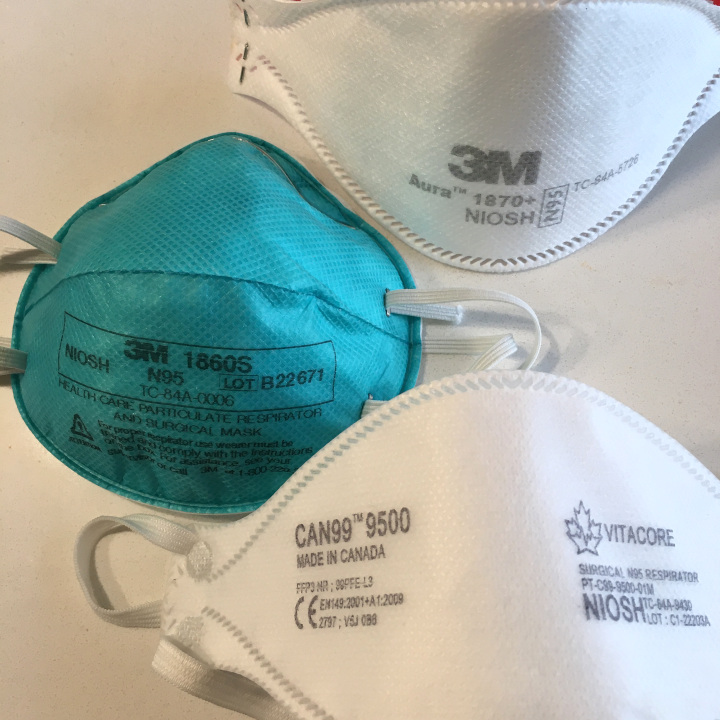
As a result, the Canadian Red Cross has stepped up to offer free N95 respirator masks across many BC Interior communities.

Comments closed

City of Castlegar offering free N95 masks

As wildfires continue to impact air quality across the West Kootenay, the City of Castlegar is offering free N95 masks through several local facilities and organizations.

Short-term smoke exposure can cause headaches, irritated eyes, sore throat, coughing, wheezing and worsen existing heart and lung conditions. In the long term, smoke exposure can contribute to the development of chronic diseases, such as heart disease and dementia, according to the Province of B.C. who has declared a provincial state of emergency due to the numerous wildfires throughout the province.

The province advises the best way to reduce health risks from wildfire smoke is to reduce exposure – create a clean air space at home, avoid strenuous exercise, avoid outdoor activities and wear a well-fitted N95 mask.

Comments closed

‘I couldn’t breathe’: the deadly health burden of wildfire smoke

Scientists race to untangle complex links between exposure and mortality as fire weather grows more prevalent

A thousand kilometres from the infernos gorging on northern Ontario’s boreal forests, Erin O’Connor watched the sky above Canada’s biggest city turn an “almost post-apocalyptic” orange as it filled with light-scattering particles of soot and ash. Stepping outside the halls of Toronto General hospital, where air filters were keeping patients safe from the worst of the fumes, she was struck by a smell so strong it felt like standing by a campfire.

“It really hit you in the face as soon as you walked outside,” said O’Connor, who runs University Health Network’s emergency department and saw a rise in patients presenting with allergies and shortness of breath. “As the days progressed, it was like that everywhere. It seemed even inside you could smell that burning.”

Far more than the flames that have engulfed southern Europe and North America in recent weeks, it is the smoke that dominates the astonishing death toll from combusting nature. Thick with toxic gases that inflame the airways and tiny particulates that breach the lungs and ride the bloodstream to hit every organ in the body, fumes from landscape fires kill 1.5 million people each year, a study in the Lancet found in 2024 – more than floods, flames, storms and heat combined.

Comments closed

Smoke from Canada’s wildfires killed nine-year-old Carter Vigh – and 82,000 others around the world

Amber Vigh had taken the usual precautions when bringing her nine-year-old son, Carter, to summer camp in July 2023. There were no fires near their home in British Columbia, Canada. Her air quality app showed low levels of pollution. She could not smell any smoke.

Carter, a music-loving Lego enthusiast who had asthma, brought along his smiling shark tooth-patterned emergency kit that held an inhaler, allergy pill and EpiPen. When smoke did roll in from the north, Vigh took him indoors.

But at home that evening, Carter began to cough uncontrollably. Vigh and her husband, James, followed the doctors’ checklist – emergency inhaler, drink of water, steroid inhaler – and gave him a bath to cool down. Then, “all of a sudden, he started coughing again like crazy”, said Vigh.

Comments closed

Environment Canada expands air alerts as wildfire smoke spreads over B.C.

VANCOUVER — Environment Canada’s special air-quality statements for wildfire smoke have now expanded to cover most of British Columbia, with air quality at its worst possible level in parts of the Fraser Valley.

The alerts advise people to limit or avoid outdoor activity and are now in place for all of B.C. outside of Vancouver Island, the Central and North Coast, Haida Gwaii and about a quarter of the province on its northern edge.

An air-quality warning continues to be in effect in Metro Vancouver, covered by orange smoke haze for a third day.

Comments closed

Wildfire smoke prompts air quality warnings on B.C.’s South Coast

Air quality warnings have been issued for much of B.C.’s South Coast, where smoke wafting from wildfires on both sides of the Canada-U.S. border has created hazy skies.

Elevated levels of fine particulate matter have been detected across Metro Vancouver and the Fraser Valley as a result, creating a risk of negative health effects.

The conditions are expected to last “a few days, or until there is a change in the weather,” according to a notice posted on the Metro Vancouver Regional District website on Wednesday.

As of the early afternoon, the smoke had pushed Vancouver to the top of a “most-polluted major city” ranking from IQAir, a Swiss company that develops air quality monitoring systems.

Comments closed

Wildfires are reversing Canada’s progress on improving air quality

It’s hard not to forget the 2023 Canadian wildfire season, when more than 16 million hectares of forest were lost, thousands were displaced and smoke suffocated cities across both Canada and the U.S.

And it turns out Canada experienced its worst air pollution levels that year since 1998, according to a new report released today by the University of Chicago’s Air Quality Life Index (AQLI). At the same time, the report found that pollution levels didn’t change much for the rest of the world in 2023.

If those levels continued for a person’s lifetime, the average Canadian would lose roughly two years of their life expectancy, according to the report.

Efforts have been made around the world, including in Canada, to curb harmful emissions of fine particulate matter with a diameter of less than 2.5 micrometres, also known as PM 2.5. But wildfires are reversing those advances — with serious health consequences.

Comments closed

Wildfire smoke far more dangerous to health than thought, say scientists

Choking smoke spewed by wildfires is far more dangerous than previously thought, a new study has found, with death tolls from short-term exposure to fine particulates underestimated by 93%.

Researchers found that 535 people in Europe died on average each year between 2004 and 2022 as a result of breathing in the tiny toxic particles known as PM2.5 that are released when wildfires rage.

Under standard methods, which assume PM2.5 from wildfires is as deadly as from other sources, such as traffic, they would have expected just 38 deaths a year.

Comments closed

What’s all this wildfire smoke doing to your health? Here’s what experts have to say

People who breathe air polluted with large amounts of wildfire smoke visit hospital emergency rooms more often for respiratory symptoms, according to a Canadian emergency room physician and chair of the Global Climate and Health Alliance.

Rates of heart attack and cardiac arrest also increase after a couple of days of exposure, Dr. Courtney Howard said.

“So don’t just attribute that feeling of heaviness in your chest to asthma,” said Howard, who works in Yellowknife and is president of the Northwest Territories Medical Association.

“If you have other risk factors for cardiovascular disease especially, go see your friendly local emergency department.”

Comments closed

Wildfire smoke blanketing Ottawa could linger into Tuesday

Environment Canada says a cloud of wildfire smoke that is covering the nation’s capital could hang overhead into Tuesday.

A special air quality statement is in effect for much of the region as smoke continues to affect most of southern and eastern Ontario.

“The wildfire smoke may persist into tonight and possibly Tuesday before finally easing,” Environment Canada says. “Air quality and visibility due to wildfire smoke can fluctuate over short distances and can vary considerably from hour to hour.”

Comments closed

Wildfires: Montreal has the worst air quality in the world

Smoke from forest fires is responsible for poor air quality in southern Quebec, northern Ontario, Manitoba and Saskatchewan. Montreal is also on Saturday the city where air quality is the worst in the world, according to IQAir’s ranking.

With a score of 191, Montreal ranks first, ahead of cities like Kinshasa in Congo and Manama in Bahrain. Toronto is also part of the top 10, it ranks 8th with a score of 110.

A score between 101 and 150 on the IQAir index indicates that conditions are poor for vulnerable people. If the index is higher than 150, the conditions are bad for everyone’s health.

Comments closed

Wildfire smoke leads to air quality warnings for much of Manitoba this weekend

Smoke billowing from wildfires is leading to poor air quality and reducing visibility throughout most of Manitoba this weekend.

Environment and Climate Change Canada issued warnings Saturday morning for a large swath of the province, including Winnipeg and Brandon in the south, the Interlake and Thompson in the north.

“We have asthma so we try to just like think about how our chest is feeling … and go from there,” Aleecia Doyle said of she and her son, Liam Doyle. The pair ventured to Old Market Square to catch some of the entertainment for Winnipeg Fringe Theatre Festival opening weekend.

Comments closed

Saskatoon under air quality warning as wildfire smoke blows in from the north

Saskatoon residents are feeling the lingering effects of the province’s northern wildfires on Monday, as a northerly wind has blown heavy smoke into central Saskatchewan.

Environment and Climate Change Canada issued an air quality warning after 4 a.m. Monday, advising anyone likely to be affected by smoke, including infants and young children, seniors, people with chronic conditions and those who work outdoors to limit time outside and seek medical attention if they experience symptoms.

The air quality index for the day is listed as 10-plus — considered a very high risk to health.

“During heavy smoke conditions, everyone’s health is at risk regardless of their age or health status,” Environment Canada said.

Comments closed

Toronto has some of the worst air quality in the world right now — and a new study says smog and wildfire smoke can damage your heart

With the city once again blanketed in wildfire smoke, experts are warning that long-term exposure to air pollution can lead to higher risk of heart failure.

Environment Canada issued a special air quality statement on Sunday night due to wildfire smoke from northern Ontario pushing Toronto’s Air Quality Health Index to 10+, classified as “very high risk.” Poor air quality was expected to persist Monday and possibly into Tuesday.

The effects of air pollution on the heart are underscored in a recent study, which found that long-term exposure to air pollution, in particular fine particulate matter, was linked to higher levels of diffuse myocardial fibrosis, a type of heart scarring that can lead to higher risk of heart failure.

Comments closed

Air quality alert issued for Toronto, GTA as forest fire smoke pushes levels to ‘high risk’

Toronto and much of the GTA are under a special air quality statement as smoke from forest fires in northern Ontario pushes into the region, Environment Canada warned Sunday night.

The agency says winds are carrying smoke into the area, reducing visibility and pushing the Air Quality Health Index to 10+, classified as “very high risk,” early Monday morning. Poor air quality is expected to persist into Monday and possibly Tuesday, Environment Canada added.

Torontonians are urged to reduce or reschedule strenuous outdoor activities, particularly if you experience coughing, runny nose, throat or eye irritation or any other symptoms.

People aged 65 and older, pregnant people, infants and young children, people with an existing illness or chronic health condition and people who work outdoors are most at risk, Environment Canada says, adding that more serious symptoms such as chest pain or severe coughing should be treated as medical emergencies.

Comments closed

There’s a tick population boom happening in Eastern Ontario

Eastern Ontario is at the epicentre of a tick population boom, and with it, health officials are reporting the highest levels of Lyme disease in the province.

So far this year, there have been 186 confirmed cases of Lyme disease in south-east and Eastern Ontario, stretching from about Prince Edward County to the Quebec border, including Ottawa, according to Public Health Ontario. That is more than half of all the cases in the province since the beginning of 2025.

By far, the highest concentration of the tick-spread disease in the province is within the large South East Health Unit, which includes Smiths Falls, Brockville, Kingston, Belleville and Prince Edward County, among other regions. With 132 cases, it has the highest rate of Lyme disease in Ontario.

Ottawa, with 41 cases, and the Eastern Ontario Health Unit, with 13 cases, also have higher-than-average rates of Lyme disease. Those reported cases reflect the climate-driven growth of tick populations across the area and heightened risk of Lyme disease and anaplasmosis, which are both spread by blacklegged ticks carrying bacteria.
Comments closed

Poor air quality supports activated in Edmonton

The City of Edmonton has activated its extreme weather response due to high-risk air quality caused by wildfire smoke. The response began at 10:00 a.m. on Saturday, and will continue until 9:00 a.m. on Monday, with possible extension if conditions persist.

City recreation centres, pools, and libraries are open to anyone needing relief from the smoke.

These indoor spaces offer cleaner air, unlike transit centres and LRT stations, which are exposed to outdoor air.

Free N95 masks and bottled water are also available at some City facilities, including libraries and recreation centres.

Residents are urged to stay indoors, keep windows closed, and check on vulnerable neighbours.

Comments closed

Ottawa’s air quality among the worst in the world as wildfire smoke blankets the region

The City of Ottawa is experiencing some of the worst air quality in the world due to wildfire smoke on Friday, with the poor air quality expected to continue into Saturday.

A special air quality statement remains in effect for Ottawa, eastern Ontario and western Quebec, warning smoke is causing poor air quality and reduced visibility.

“High risk air quality due to wildfire smoke is expected over the area overnight. As smoke levels increase, health risks increase,” Environment Canada said in an updated statement at 5 p.m. Friday.

“Limit time outdoors. Consider reducing or rescheduling outdoor sports, activities and events.”

Ottawa’s air quality was rated 10+ or “Very High Risk” at 4 p.m., after a slight improvement earlier in the day. The Air Quality Health Index shows Ottawa’s air quality will be or 10 or “High Risk” tonight, improving to to “5-Moderate Risk” tomorrow.

Comments closed